Education
In 2025, Erasmus University Rotterdam (EUR) worked on themes arising from the ambitions set out in Strategy 2030, the Educational Vision (2023) and the Research Vision (2024).In doing so, EUR continued on the course it had already set, in which education and research are developed and strengthened cohesively.
EUR provides challenging, impact-driven, inclusive and future-proof education. Achieving that goal will require ongoing attention. Impact-driven education continues to be centred around preparing students to understand complex challenges and engage empathetically with other perspectives. The focus is on establishing sustainable long-term collaboration with the world outside the university, for example on issues such as poverty and health in Rotterdam’s neighbourhoods.This is achieved through neighbourhood partnerships that we developed over the course of the year within broader open innovation networks and across themes such as the energy transition (in the Port of Rotterdam). We also collaborate with the business community in delivering our education.
Generative AI calls for reflection on the validity of assessments to ensure that the intended exit level is achieved. Furthermore, it sets new skill requirements for lecturers and invites them to reconsider whether the programme objectives still meet the demands of the present day. These questions are central to the integrated plan known as AI@EUR. More information about the AI@EUR programme is provided later in this report.
In 2025, the admission and selection procedures for our curricula were critically evaluated with a view to strengthening equal opportunities at the entry point. In collaboration with the Student Wellbeing programme and the faculties, policies were developed that are better tailored to the varied needs of our diverse student population and support their personal and professional development.
Lecturers are essential to good education. The Community for Learning and Innovation (CLI)remains a key driver in promoting lecturer development in bachelor degrees and master programmes through fellowships and the Senior and University Teaching Qualifications (STQ and UTQ). The Erasmus Department for Continuous Growth and Education (EDGE) delivers these professional development programmes. The introduction of the Smarter Academic Year (SAY) in the first three faculties has created more space in the annual timetable for lecturers and students.
EUR is using the quality agreement funds/student loan system funds provided under the Administrative Agreement on Higher Education and Science to give a strong boost to achievement of the above ambitions and make a sustainable investment in improving educational quality (see Appendix 1 for details).
Impact-driven education and engagement
Impact-driven education prepares students for their role as academic professionals who understand and tackle urgent societal challenges. In 2025, the faculties drew up a joint long-term strategy, focused on further development of the teaching model and structural collaboration with external partners.
Certain faculties worked on specific initiatives, including projects focusing on skills training: Erasmus School of Law (ESL) and Rotterdam School of Management (RSM) developed courses designed to encourage critical reflection, with RSM incorporating peer learning and action planning. In addition, all faculties explored alternatives to the traditional final thesis, such as practical assignments and portfolios.The CLI will continue to oversee this process in 2026.
EUR students continued to work on developing neighbourhood-based learning at the Putselaan, Crooswijk and HefHouse sites. Students took part in practical assignments at these sites, often in collaboration with local partners and students from other educational institutions.
Education and technology: artificial intelligence
The rapid development of AI led to the launch of the university-wide AI@EUR programme in 2025. This programme helps guide the use of AI in education, research and operations. Educational activities focus on sub-themes, such as:
- New forms of examination and assessment;
- AI-supported teaching methods;
- Expansion of expertise;
- Enhancing digital literacy among students and lecturers;
- Responsible AI in curricula.
In 2025, various faculties experimented with chatbots, AI-supported assessment and other AI applications. Faculties such as ESL and Erasmus School of Economics (ESE) focused on preparing for changes in professional skills, while other faculties developed teaching methods that make effective use of AI tools. Erasmus School of History, Culture and Communication (ESHCC) introduced an AI check for lecturers to assess potential risks of plagiarism and the accessibility of information. RSM experimented with the use of chatbots in student support.
Student wellbeing
The Student Wellbeing (SW) programme has been running since 2020 and has been given a permanent place within the administrative agreements. In 2025, the focus was on three pillars: sense of belonging; prevention and practical support; and increasing expertise within EUR.
The faculties appointed wellbeing liaisons, whose role is to raise the visibility of wellbeing in the curriculum, strengthen relationships between students and lecturers and create accessible informal meeting places such as The Living Room, with a view to fostering a sense of belonging. Students were given better access to prevention and practical support through:
- Short waiting times;
- Anonymous online options;
- Workshops and podcasts;
- Complementary programmes;
- Collaboration with care chain partners.
Lecturers and other staff were trained to recognise signs of impaired wellbeing and conduct supportive conversations. Student Wellbeing Officers coordinated initiatives, while Learning Communities brought together professionals from across the student support chain.
EUR collaborated with agencies including Rotterdam City Council, Rotterdam Municipal Health Service (GGD Rotterdam), 113 Suicide Prevention and Rotterdam University of Applied Sciences on campaigns relating to drug use and suicide prevention. External partners provided e-health modules and online coaching.
Internationalisation
Internationalisation remains a key theme in Strategy 2030. In 2025, work was carried out to link this theme to the new strategic priorities. This work included:
- Analysing the partnership portfolio;
- Strengthening international and intercultural competencies in curricula;
- Making use of international grant programmes such as Erasmus+ and Horizon Europe;
- Incorporating international contexts into study programmes.
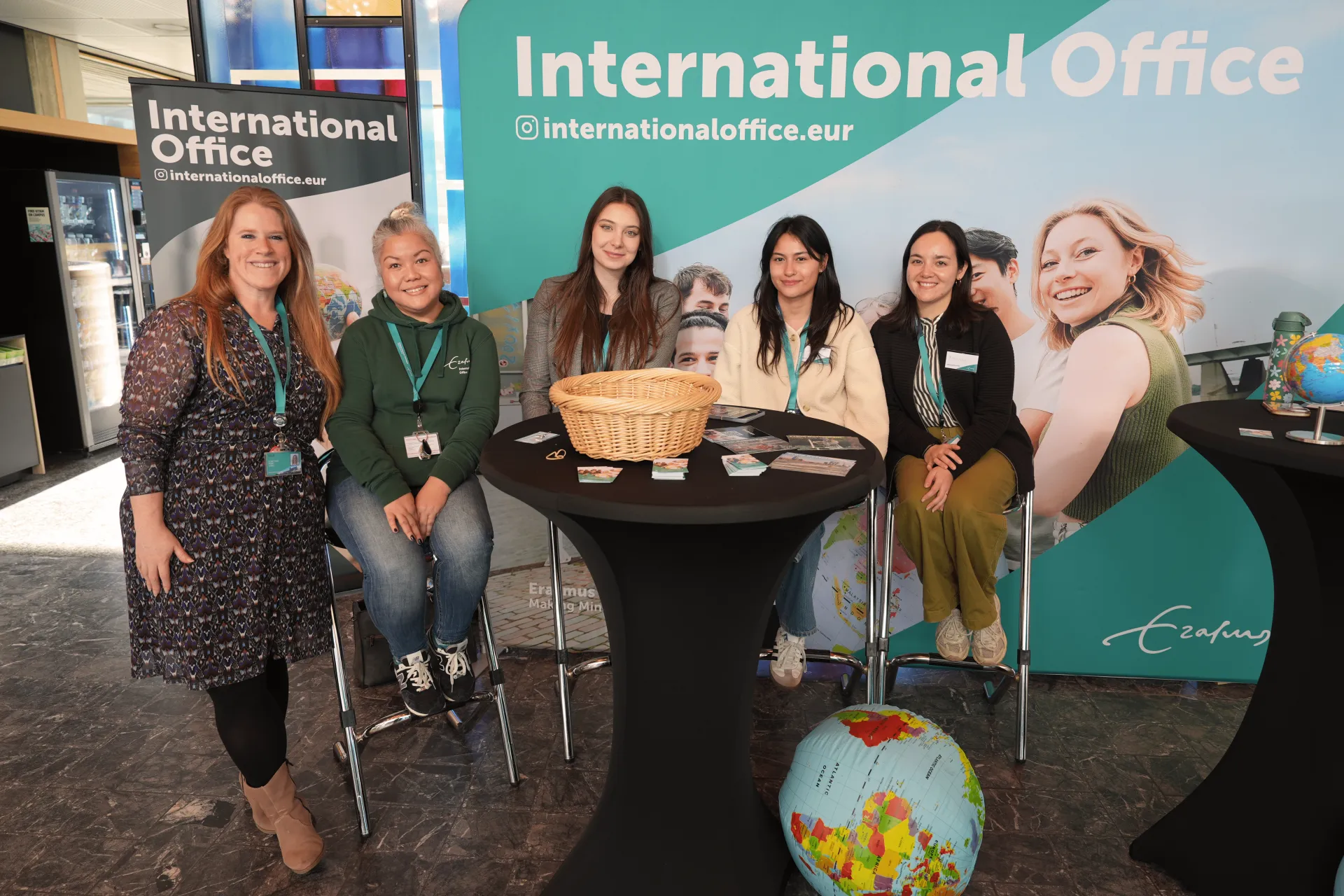
In 2025, around 625 students, 60 lecturers and 75 other staff members took part in Erasmus+ mobility schemes. Three new Erasmus+ KA2 projects were awarded: COMPASS, FORTIFY and EMBINT. The pending Balanced Internationalisation Act (WIB) and agreements on self-regulation present challenges, but EUR remains focused on promoting international collaboration and partnerships, driven by our ambition to be a world leader committed to our local region.
Strategic portfolio development
Strategy 2030 and the strategic themes described above have implications for the education portfolio. EUR aims to provide a future-proof, flexible and inspiring range of programmes that prepare students for social, political and economic developments. In 2025, an interfaculty meeting was organised on the further development of portfolios. A new minor policy is being introduced to support this development. Between 2025 and 2027, discipline-specific minors will be transformed into broad-based minors in which students will work together on current social issues, such as poverty, CO₂ reduction and urban health.
The new policy allows for thirty EC minors. This means that students will have more time to work on their chosen topic over a longer period. Furthermore, the minors will encourage collaboration with external partners and focus on interdisciplinary collaboration. The range of available topics is in line with Strategy 2030. A special committee will ensure that the policy objectives are implemented and educational quality is maintained.
Ministry project: A Smarter Academic Year – 2023 to 2026
In 2021, following reports of high workloads in higher education, the Young Academy published an advisory report entitled ‘A Smarter Academic Year’. This showed that the Dutch academic year is longer and more intensive than that of other countries. In 2023, the Ministry of Education, Culture and Science launched a four-year nationwide pilot (running until 2026) on downtime during the academic year.
EUR and the University of Amsterdam are the joint coordinators for this pilot. In May 2025, the coordinators submitted an interim evaluation that provides an initial insight into the outcomes of the individual pilots and the extent to which these outcomes can contribute to more downtime in the academic year.
In addition, a report was published in June 2025 following an international comparative study commissioned by the Ministry of Education, Culture and Science, in which the Dutch academic year for various degree programmes was compared with European equivalents. This international study was carried out in parallel with the nationwide ‘A Smarter Academic Year’ pilot. In addition, several successful themed and knowledge-sharing events were held in 2025 for the pilot participants and stakeholders (including the Accreditation Organisation of the Netherlands and Flanders (NVAO), the Inspectorate of Education, the Young Academy and student unions).
Three EUR faculties (ESL, RSM and ESHCC) are involved in this project, with each running its own pilot:
- RSM is focusing on assessment innovation and teaching-free weeks. Little teaching takes place in December, with teaching being concentrated in the first few months of the academic year. Instead, students spend December working on an independent study assignment or a practical project;
- In the master programme in Law & Technology, ESL has replaced the research and thesis project with a master thesis. Students work towards specific learning objectives, which helps to reduce their workloads. The evaluation showed that workloads are manageable for students, despite the shorter academic year;
- ESHCC has reduced peaks in workloads by adjusting the BA-1 calendar for the History and International Bachelor (IB) in History programmes and better aligning it with the rest of the faculty.
Smarter Academic Year(SAY)
In addition to participating in and coordinating the nationwide ‘A Smarter Academic Year’ pilot, EUR launched its own internal Smarter Academic Year (SAY) project in 2022. The project provides for a sustainable review of the annual timetable and aims to create more downtime for lecturers, students and support staff, as well as more opportunities for interdisciplinary and project-based collaboration.
A strategic implementation plan was drawn up in 2024, setting out specific recommendations for a smarter academic year at EUR, including educational tools for adapting the annual timetable and curricula. By the summer of 2025, all faculties had amended the blueprints for their annual timetables to bring them into line with the guidelines set out in the implementation plan. In September 2025, the ESL, RSM and ESPhil faculties began implementing their new faculty blueprints and related educational innovations. The remaining faculties will do the same in the 2026-2027 academic year. A monitoring and evaluation plan has been drawn up to monitor the progress of the implementation of the SAY project and the associated revised annual timetables and educational innovations and reforms.
Lecturer development
In 2025, the CLI promoted professional development through:
- Collaboration with Fellows in the areas of assessment, professional identity and generative AI;
- Certified training courses (UTQ, STQ, Educational Leadership Course (LOL));
- MicroLabs and courses on student-activating teaching methods and the responsible use of AI;
- The sharing of knowledge between faculties.
Demand for STQ courses rose sharply, leading to waiting lists. These waiting lists will be cleared in 2026. TeachEUR has developed into a practical teaching skills hub with information on teaching methods, AI case studies and a validated list of AI tools.
Internal quality assurance
In 2025, a second cohort began the professional development programme for quality assurance advisers. The new Assessment Vision, the Assessment Framework and the Institutional Policy on Quality Assurance in Education were also adopted. The updated TOE tool has been developed into a toolbox.
Support for the participation bodies was strengthened through:
- Centralised, customised training;
- Faculty funding for projects to strengthen skills;
- Strengthening of interfaculty consultation structures.
Accreditations and interim evaluations
Panel reports were submitted for 22 degree programmes as part of the re-accreditation process. An application was made to extend the special mark of recognition for ‘Small-scale and Intensive Education’ for the Bachelor of Liberal Arts and Sciences; for the Master of Development Studies, an application was made to extend the special mark of recognition for ‘Internationalisation’. These applications were approved.
Interim programme evaluations were carried out for the Educational Master in Primary Education, the European Master in Health Economics and Management, the Research Master in Infection and Immunity, the Master in Societal Transitions and the Bachelor and Master in Sociology.
In 2025, it was decided to phase out the Research Master in Public Administration and Organisational Science (ESSB). The applications for accreditation of the new e-master programmes in Sustainability Management (RSM) and Marketing and Data Intelligence (ESE), and the joint degree of International Master of Advanced Research in Criminology (ESL), were finalised in 2025 and approved by the NVAO. The programme-based changes to the Master in Development Studies (ISS), which resulted in a New Programme Assessment, were also approved.
Flexible education for professionals (LLO)
In 2025, EUR strengthened its position as an academic partner for education, particularly for mid-career professionals. The team at the Erasmus School for Growth and Education (EDGE) worked on establishing clear internal agreements and framework conditions for flexible education; improving the visibility of the range of Lifelong Learning (LLO) courses on offer; collaboration with organisations both within and outside the university; and teaching and quality assurance support in the development of courses for professionals. In line with its commitment to engagement, EUR’s provision of LLO courses strengthens its public value and societal impact. In the coming years, LLO will be given greater priority; this development is in line with Strategy 2030.
Research
EUR distinguishes itself through research that is curiosity-driven or demand-driven, groundbreaking and independent. Our scholars and scientists work closely with each other and with external partners. Thus, they leverage insights from various disciplines to create new knowledge and innovative solutions. In 2025, the research domain faced both opportunities and challenges. On the one hand, investment in research infrastructure, interdisciplinary collaboration and talent development offered new opportunities to strengthen research. On the other hand, the discontinuation of national funding schemes, such as the starter and incentive grants, called for a reorientation.
Starter and incentive funds, Workload and talent funds
The Administrative Agreement signed in 2022 by the Minister for Education, Culture and Science at the time, Robbert Dijkgraaf, provided for the allocation of long-term funding for starter grants and the allocation of funding for incentive grants for a period of ten years. The grants enabled EUR to invest in research on a long-term basis. By creating new positions for doctoral candidates each year and systematically allocating more time for research to EUR academics, the university was able to solidify its reputation as a research-driven institution with impact. The discontinuation of the programme in 2024 is therefore deeply regretted, and efforts are being made to realise the ambition of becoming a more research-driven institution through alternative means.
Compared with other institutions, EUR receives a relatively substantial amount of ‘Workload and Talent’ funding from the Ministry of Education, Culture and Science. This is due to the adjustment to the flat-rate basic grant made in 2023 for the calculation of starter and incentive funds. In accordance with the Ministry’s decision, the funds will be used specifically to support young researchers and reduce their workload. They will thus offer an opportunity to partly offset the loss of the starter and incentive grant funding.
Research infrastructure
In 2025, the Vidatum project management tool was introduced to help researchers apply for, manage and report on externally funded research projects. The Research Support Portal was launched to bring together all information relating to research support in one place. In addition, a number of projects were launched in 2025:
- The Generative AI for Research programme, which aims to improve the maturity of services in the area of GenAI;
- The Research Data Storage Rationalisation project is working on new guidelines for the secure storage of research data (to be delivered in the first quarter of 2026);
- The ‘Compliance Support for Researchers’ project is working on a streamlined process for compliance checks (to be delivered in the fourth quarter of 2026).
The new Co-Creation Lab in the Erasmus Behavioural Lab opened in February 2025. This space is for anyone who wants to make a societal impact through experimentation and participation. Here, researchers, students and civil society partners work on innovative and impactful solutions to complex societal issues through co-creation and design-based research.
In late 2025, the new research-dedicated 3 Tesla MRI scanner was commissioned with a celebratory ceremony. The scanner will be used to carry out high-quality neuroscience research. The MRI scanner is located in the Erasmus Medical Centre and will be used by a wide range of researchers, including from ESSB and RSM. Thanks to the collaboration between the various faculties and the Erasmus Medical Centre, MRI scans are now more accessible to researchers. This makes it easier to conduct neurocognitive studies and increases research capacity within EUR.
In December 2025, the Dean of ESHCC signed a collaboration agreement with CLARIAH-NL. CLARIAH-NL stands for Common Lab Research Infrastructure for the Arts and Humanities, and its purpose is to establish digital infrastructure for the humanities. To this end, large amounts of data and software from various humanities disciplines will be linked and made digitally searchable.
CLARIAH-NL will strengthen links with European research infrastructure.
Sector plans
EUR participates in the Medical Sector Plan (through the faculties of Medicine and ESHPM), the Social Sciences and Humanities (SSH) Sector Plan (ESE, RSM, ESHCC, ESSB and ESPhil) and the Legal Sector Plan. A final evaluation of the Legal Sector Plan was submitted to the Ministry of Education, Culture and Science in May 2025. In light of the positive results and developments in the Legal sector, the Ministry of Education, Culture and Science decided to allocate the funds associated with this sector plan on a permanent basis. In the second half of 2025, the sector then turned its attention to further planning, with a view to embedding the thematic direction that had been set (for ESL, this is reflected in the priority areas of ‘Empirical Legal Studies’ and ‘Re-evaluation of public interests in private relationships’).
For the sector plans for Medicine (Erasmus MC and ESHPM) and SSH (the Humanities (GW) and Social Sciences (SW) sectors and the overarching theme ‘SSHBreed@EUR’ (SSH-Wide)), 2025 was dominated by preparations for the mid-term evaluation, which began after the summer with the submission of self-evaluations to the evaluation committees. The focus of this evaluation was primarily on the remaining period from 2026 to 2028, during which collaboration on the sector plans will remain a key priority. It also looked back on the positive course set during the years 2023-2025. The overarching SSH-Wide Sector Plan focuses on the social impacts of digitalisation on work, prosperity and entrepreneurship.
In 2025, internal meetings were held and the organisation participated in national meetings with a view to strengthening collaboration within and between sector plans and embedding the priority areas within EUR. For example, ESSB organised lunch sessions on the four themes of the Social Sciences Sector Plan, SSHBreed@EUR held its first national gathering on 7 March 2025 as part of an annual conference on the theme ‘The impact of digitalisation on work, prosperity and entrepreneurship’ and researchers from SSHBreed@EUR contributed to the UNL Digital Society Conference in November 2025. Also worth noting is the awarding of the Van Poelje Prize to researcher Dr Vivian Visser from the Social Sciences Sector Plan.
Erasmus Initiatives
The Erasmus Initiatives are four university-wide interdisciplinary programmes that were established in 2015/2016 to encourage collaboration between faculties and foster internal and external alliances. As part of the new EUR strategic plan, the Erasmus Initiatives are explicitly being positioned within the Open Innovation Networks that are to be established, where researchers will work in collaboration and co-creation with society to address societal challenges and develop new interdisciplinary and transdisciplinary research and education.
DoIP
The Erasmus Initiative ‘Dynamics of InclusiveProsperity’ has inspired and encouraged interfaculty collaboration on ‘Broad Prosperity’. In addition to the core faculties (RSM, ESL and ESPhil), links with researchers from other faculties have also been strengthened, such as Frank van Oort, Erasmus Professor of Broad Prosperity (ESE). Furthermore, from the outset, DoIP has maintained close links with various external parties, particularly in the public sector. Examples include various municipalities, such as Vlaardingen and Helmond, and the Netherlands Environmental Assessment Agency (PBL). Among other things, this led to involvement in the Regional Deals. One example of a DoIP project was a study into the economic impact of the opening of the Maas Delta Tunnel near Vlaardingen, which became operational in late 2024. DoIP has also made efforts to get involved in international projects and networks. One example is a project on zero-waste cities, which was carried out in collaboration with Chinese partners and received a grant of €1 million from the Dutch Research Council (NWO).
SCBH
The Erasmus Initiative ‘Starter Choices for Better Health’ (SCBH) has strengthened EUR’s role as a driving force behind interfaculty research in the field of health. We can make a significant contribution to such research, given the expertise available here in Rotterdam. In 2025, SCBH published more than thirty joint scientific articles, as well as various contributions to healthcare policy reports. Given the challenges facing the healthcare sector in the Netherlands, SCBH research remains highly relevant and is, in fact, becoming even more urgent. A prime example of a new project within SCBH that translates scientific knowledge into practical applications in health care is PREMIER-CVD, which has received a grant of over €1.5 million from the Dutch Heart Foundation. The project aims to promote a healthier diet.
AiPact
The Erasmus Initiative ‘Societal Impact of AI’ (AiPact) redefined its profile in 2025 and reinforced its commitment to transdisciplinarity, societal impact and co-creation, both within and outside the university (AICON and AlgoSoc). Existing networks (RSM, ESSB, ESHCC, ESE, ESHPM and Convergence partners Erasmus MC and TU Delft) have been maintained and expanded, for example through collaboration with the FNV trade union, SSH-Wide, the Social AI Lab and an international AlgoSoc conference.
A key part of AiPact’s identity is nurturing young talent with an interest in innovative, impact-driven practice. The first cohort of doctoral candidates in this Erasmus Initiative (EI) completed their research this year, with publications in peer-reviewed journals such as Work, Employment and Society and The Design Journal, as well as in public-facing media such as BiteScience. This consolidated the knowledge gained in what are largely collaborative, impact-oriented projects.
AiPact has raised awareness of its themes and developed them further through impact-focused activities – such as the show ‘Unravelling the AI Machine’, performed at NEMO for two thousand young visitors.
VCC
The Erasmus Initiative ‘Vital Cities & Citizens’ (VCC) engaged in a number of activities in 2025 to encourage interdisciplinary collaboration with positive societal impact. This included more than twenty projects. All of these projects involved collaboration between different faculties (ESL, ESE, EMC, ESHPM, RSM, IHS, ESSB, ISS and ESHCC). This is a clear expression of the interdisciplinary nature of VCC.
VCC has developed its own distinctive approach to engaged research, which involves close collaboration with residents’ associations in particular. This is being done under the banner of Wijkwijs (Wijkwijs.nl), a joint programme with the Resilient Delta Initiative. Wijkwijs now has eleven active projects in various neighbourhoods and suburbs of Rotterdam. There is widespread interest in Wijkwijs, including from NWO Open Science, the EU’s ERA programme and the nationwide Liveability and Safety programme (NPLV). Housing associations (Hefwonen, Havensteder) are also actively involved. Work has been carried out on the NWO-ORC project proposal ECCO in collaboration with Collectieve Kracht and various Dutch universities. The project was approved in 2025 and is due to start in 2026. Three doctoral candidates will be working under the VCC on the theme of residents’ associations and liveability, safety and sustainability in neighbourhoods and suburbs (Rotterdam, The Hague, Arnhem).
Quality assurance
The academic research performed for public institutions, including universities with a research remit, is reviewed by an external committee once every six years. The committee evaluates a research unit (for example, a faculty, institute or department) according to the Strategic Evaluation Protocol (SEP). Three main criteria are considered: the quality of the research, the societal relevance of the research and the future viability of the unit. Various sub-criteria are also applied. These include academic culture in terms of research integrity, diversity and inclusion, HR and talent policies, PhD policies and training of doctoral candidates, and open and responsible science.
ESHCC was evaluated in 2025. The committee praised the academic quality, the extent to which external research funding had been secured, the interdisciplinary nature of the work and its significant societal impact. The committee made a number of useful recommendations, which will be implemented over the next few months. The external evaluation process has begun for ESPhil, ESHPM and Erasmus MC. It will be completed in 2026.
In addition to the six-yearly evaluations, mid-term reviews were also carried out for Public Administration and Pedagogy, with very good results and assessments. In addition, preparations have been made for the upcoming mid-term review of ESL.
Open and Responsible Science
Open and Responsible Science (ORS) makes science more transparent, open, reliable and efficient, and is therefore essential for creating a positive societal impact. EUR intends to integrate ORS into its daily practice. To ensure that ORS practices become part of the academic process, EUR is focusing on support and domain-specific solutions for all faculties.
In 2025, 14 awareness-raising training and networking events were organised, featuring discussions, lectures and workshops. These were held in collaboration with the Open Science Community Rotterdam, the Engaged Research Study Group and several faculties. They included introductory sessions (such as Unlocking Knowledge:The Power of Open Science @ESL) and sessions aimed at experts, such as ‘AI for Open Science: Accelerating Discovery and Transparency’. In addition, three different courses were taught to doctoral candidates.
With a view to facilitating the exchange of knowledge and strengthening and supporting Citizen Science and transdisciplinary and engaged research, EUR was appointed coordinator of a project awarded by OSNL, worth €400,000, to establish the Hub for Impactful and Engaged Research (HIER). This is a four-year collaboration within the LDE and Convergence partnerships. In addition, the first successful pilot training programme for early-career engaged researchers took place in collaboration with the EMC and TU Delft.
The close connection with the Recognition & Rewards programme was reflected in the awarding of a €50,000 grant from the Dutch Research Council, intended to better integrate this important programme with ORS practice. Four faculties have formally identified ORS priorities, which are being integrated into their HR policies via the updated Recognition & Rewards framework.
Research integrity
The research integrity policy aims to prevent violations of the Netherlands Code of Conduct for Research Integrity as much as possible. It is therefore important that the topic of research integrity forms an integral part of the reflection undertaken by EUR researchers. One of the tools to achieve this is EUR’s Dilemma Game App, which prompts researchers, lecturers and students to reflect on a dilemma related to research integrity. In 2025, the Dilemma Game App was made a permanent feature of the ‘Professionalism and Research Integrity’ workshop, which all doctoral candidates at the Graduate School for the Social Sciences and the Humanities are required to attend. The app is also used during onboarding sessions for new professors. The idea is that they will then use the app within their own research group to initiate a discussion about research integrity.
In July 2025, Prof. Martin Buijsen (ESL and ESHPM) was appointed as a confidential counsellor for research integrity, alongside Prof. Susanne Janssen(ESHCC). He takes over from Prof. Erik Schut (ESHPM). In 2025, seven people contacted the confidential counsellors.
Doctorate conferrals and PhD policy
In 2025, the growth in the number of doctorate conferrals continued: 446 compared with 437 in 2024. 67% of the total number of doctorates conferred were from Erasmus MC. Of the total number of candidates receiving a doctorate, 62% were women, which is a small increase from 2024. There were a total of 16 doctorate conferrals (4% of the total) in which the candidate was awarded the cum laude (CL) designation. At the EUR-wide level, men and women were awarded the designation in equal percentages.
One candidate obtained their doctorate in 2025 within the doctoral candidate experiment. No candidates dropped out of the programme. There are currently three active doctoral candidates.
table 1
| Faculty Total | male Total | male non-CL | male CL | female Total | female non-CL | female CL | CL total | |
|---|---|---|---|---|---|---|---|---|
| Erasmus MC | 301 | 110 | 106 | 4 | 191 | 184 | 7 | 11 |
| ESE | 17 | 11 | 11 | 0 | 6 | 6 | 0 | 0 |
| ESHCC | 10 | 5 | 5 | 0 | 5 | 5 | 0 | 0 |
| ESHPM | 23 | 4 | 4 | 0 | 19 | 17 | 2 | 2 |
| ESL | 26 | 15 | 14 | 1 | 11 | 11 | 0 | 1 |
| ESPHIL | 3 | 2 | 2 | 0 | 1 | 1 | 0 | 0 |
| ESSB | 29 | 8 | 8 | 0 | 21 | 20 | 1 | 1 |
| ISS | 16 | 6 | 6 | 0 | 10 | 10 | 0 | 0 |
| RSM | 21 | 10 | 10 | 0 | 11 | 10 | 1 | 1 |
| TOTAL | 446 | 171 | 166 | 5 | 275 | 264 | 11 | 16 |
In 2025, the PhD policy focused on various PhD-related themes. First and foremost, work was done to set up an interfaculty PhD council. This is expected to be officially launched in 2026. In addition, there was a focus on the quality of supervision, and from 2026 onwards, supervision training will be compulsory for new supervisors. The PhD pages on the website have been updated to provide better information on this topic.
De Young Erasmus Academy
The Young Erasmus Academy (YEA, 22 members) is a diverse group of talented academics from various disciplines.
The focus areas for the YEA in 2025 included:
- Recognition and Rewards – The YEA has a subgroup for this issue that actively considers policies around and the implications of the Recognition and Rewards programme. The members of the subgroup are involved in local implementation in the various faculties;
- Sustainability – The YEA liaises with the sustainability manager and provides input on this matter;
- Digital Competence Centre – The YEA is an active member of the advisory group of the Digital Competence Centre (EUR-DCC).
The YEA is working on becoming more professional. A student assistant has been recruited to help organise events and manage social media. This will help to ensure greater continuity in the YEA’s work and raise its profile.