
Being a people-centred organisation and culture
In 2025, Erasmus University Rotterdam (EUR) launched Strategy 2030. Being a people-centred organisation is an essential part of this strategic plan. The model we are applying was developed by Townsend & Romme (2024) and has been supplemented in green with aspects specific to EUR. All five dimensions influence our culture and either contribute to or hinder the goal of One Connected EUR.
As in 2024, staff rated their engagement with EUR at 7.2 out of 10. This was the average score given in the Engagement & Enablement Scan (E&E Scan), the staff satisfaction survey, which was carried out for the third time in 2025. The target is at least 7.5. The score for leadership rose from 6.6 in 2024 to 6.8 in 2025. EUR’s leadership programme contributed to this increase.
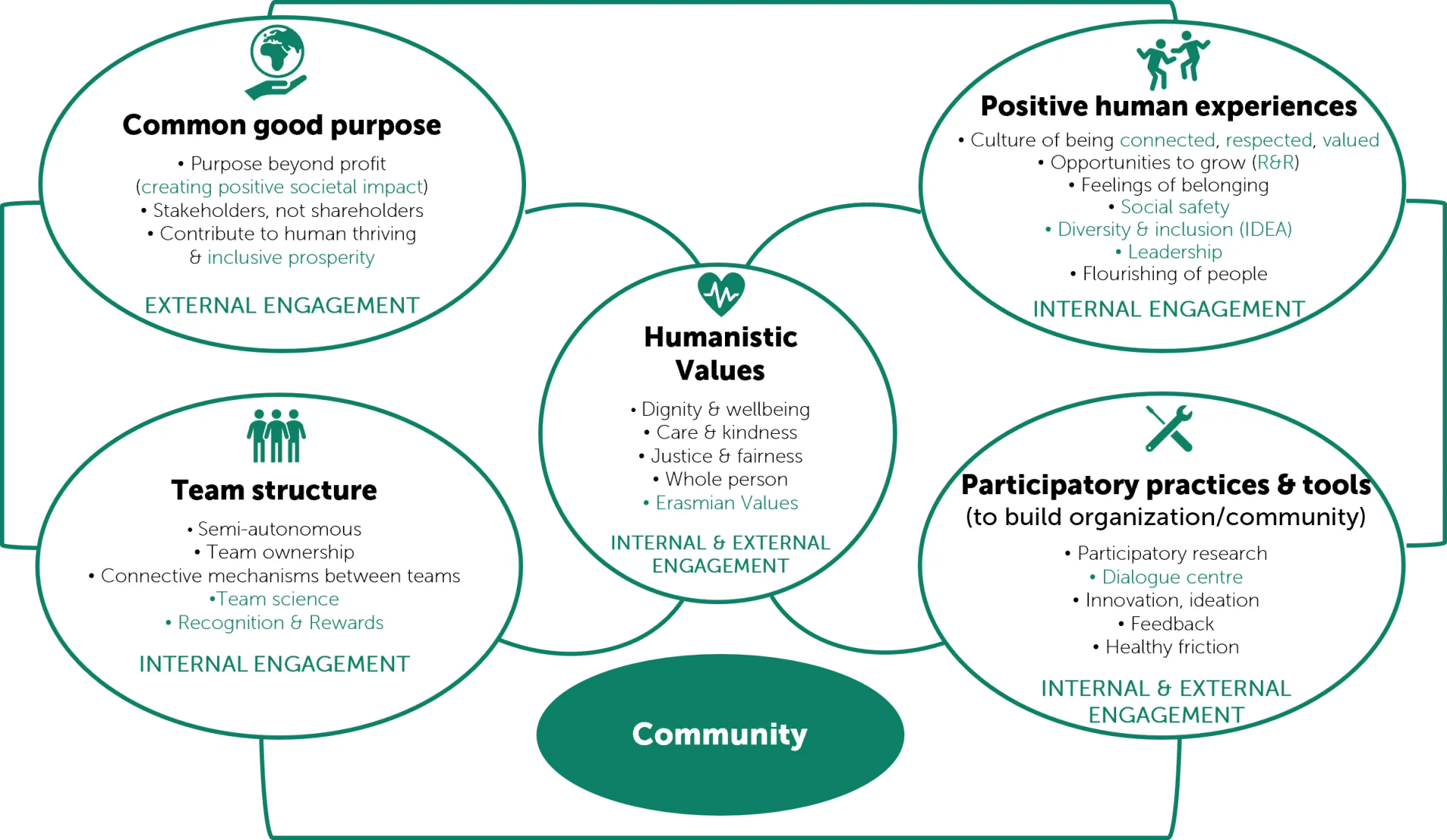
Through Strategy 2030 and the HR strategy, EUR is working to improve the engagement and enablement of our staff. We are doing this by implementing interventions across all dimensions of the model.
Social safety and wellbeing
In 2025, health, safety and wellbeing were again high on the agenda in our organisation, with important insights emerging from the E&E Scan and the figures for absences due to illness. In the 2025 E&E Scan, EUR scored an average of 5.9 for workloads (2024: 5.7) and 5.2 for work-related stress (2024: 5.3). Staff assigned their work-life balance an average score of 6.5 (2024: 5.6). Academic staff once again scored lower than professional services staff. The results show that 14% of EUR staff sometimes or often experienced inappropriate behaviour in the workplace in 2025 (2024: 19%), while 15% of respondents said they did not know where to find support after encountering a socially unsafe situation (2024: 21%).
Various initiatives have been launched to improve social safety and wellbeing for staff. For example, more than eight hundred staff from all service units and faculties participated in Active Bystander Training. During these training sessions, staff members discussed appropriate and inappropriate behaviour and the role of a bystander. The sessions not only provided practical guidance, they also encouraged reflection and dialogue. The key message: doing nothing is not an option, and we are all responsible for ensuring a socially safe working environment. In addition, the range of internal support services has been streamlined and clarified, so that staff and students can access the appropriate help quickly and effectively when they need it. As part of efforts to improve the range of support services, various projects have been launched, such as the development of the Network of Confidential Counsellors and the review of HR information on MyEUR. A new general safety page has been launched on the intranet. In addition, EUR received a national grant to develop e-learning modules on inappropriate sexual behaviour and communication materials on the role of confidential counsellors tailored to different target groups. This work will be done from 2026 onwards.
Health and safety and absences due to illness
In 2025, the health and safety officers completed a hazard identification and risk assessment (RI&E) for each organisational unit. The health and safety officers have completed a training course on computer ergonomics and are now able to support other staff in this area.
The Netherlands Labour Authority (NLA) visited EUR in late 2025 as part of the Workloads and Social Safety (PSA) project. A detailed RI&E on psychosocial occupational stress (PSA) and a health and safety policy have been drafted, and will be finalised once the conclusions of the NLA have been discussed with EUR.
Preventative Medical Examinations (PMOs) were carried out in collaboration with our Occupational Health and Safety Service within the ESSB, ISS and ABD organisational units. PMOs consist of a questionnaire and a medical examination. The questionnaire was completed in 2025 with an average response rate of 40%; the medical examinations will take place in January 2026. The PMO group report is expected in March 2026. PMOs are offered once every four years to all EUR organisational units.
The rate of absences due to illness is 4.11%. This is below the average for the education sector, which was 5.0% in the fourth quarter of 2025. It is also slightly lower than in 2024 (4.23%). The rate of absences due to illness is higher in the service units than in the faculties.
In 2025, a new absence tracking system for managers was launched. This system brings together all relevant information on illnesses and absences in one place and provides managers with greater structure and guidance in supporting staff. This is a step towards streamlining the processes for absences, so managers and the organisation can handle absences better.
Inclusion – Diversity – Equity – Access (IDEA)
The IDEA Centre, working closely with the HR Department, continues to promote and uphold the principles of inclusion, diversity, equality and accessibility in all aspects of university life. Key initiatives and policy measures this year included providing advice on the new target of 40% female professors by 2030, evaluating the Gender Equality Plan and expanding the Beyond 25/25 initiative to the ‘Advancing Inclusive Academia’ programme. The IDEA Centre also provided advice on a wide range of topics, including recruitment and selection, learning and development, and leadership, and updated existing resources. These included the ‘Inclusive Recruitment & Selection’ training course and the ‘Combining Work & Life’ guide. Other initiatives continued with the support of the IDEA Centre, such as the network of faculty diversity officers and four staff networks (QuEUR, Females in Academia Moving towards Equity, Young@EUR and the network for staff members with disabilities).
In the context of the Jobs Agreement Act, as at the reference date of 31 December 2025, 88.48 FTE positions, at an average of 25.5 hours per week, were filled by employees within the target group described in the Act. This represents 69% of the target of 128.1 FTEs, which is based on the statutory quota. In 2025, we offered the usual HARRIE training to support supervisors and managers of employees hired under the Jobs Agreement Act. In the third quarter, an additional HARRIE training session was organised, aimed at supporting employees with refugee status. It was decided in 2025 that recruitment for new positions under this scheme would be discontinued in 2026. The reason is a shortfall in the central budget for funding salaries under the Jobs Agreement Act and the announced cuts to the university’s budget.
This year, the proportion of international staff did not increase in relation to staff of Dutch nationality. The ratio remained virtually the same as the previous year. This was to be expected, given the political focus and measures taken in recent times to systematically reduce internationalisation in higher education. It is positive for EUR that there was no decline in the proportion of international staff in relation to Dutch staff, given that ‘world citizenship’ is one of the Erasmian Values.
Connecting through leadership, utilising diverse talent and teamwork
Leadership
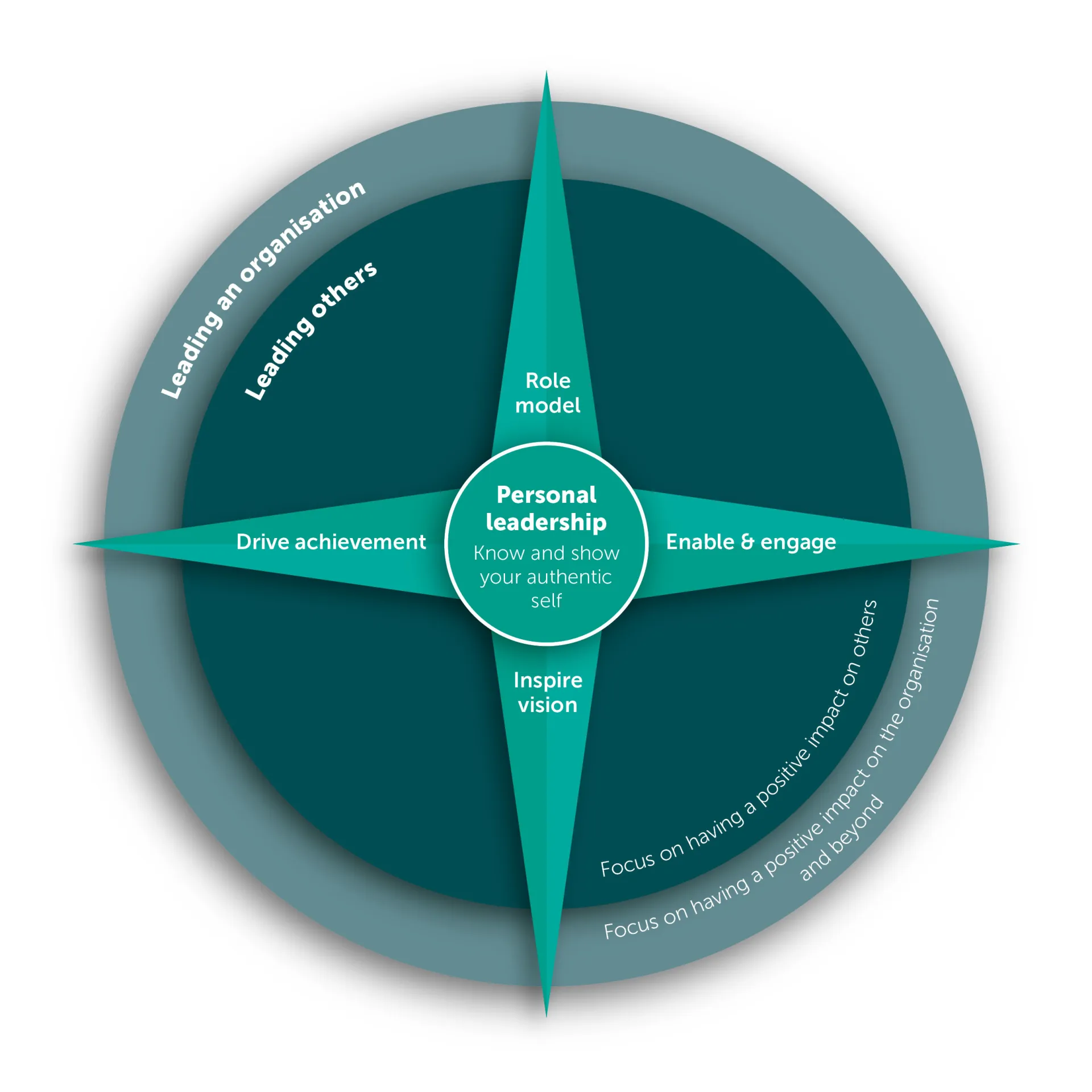
The EUR leadership programme, launched in 2022, was strengthened and expanded last year. EUR is aiming to create a working environment in which staff wellbeing is a priority and staff are encouraged to contribute to a positive societal impact. The EUR leadership profile is aligned with this aim and forms the basis for a wide range of initiatives. A number of leadership events were organised to
strengthen the communities of practice, while the leadership learning pathway – featuring training courses tailored to specific target groups – was updated. It is a challenge to get all managers involved in the initiatives; participation among academic staff especially remains low. This will be a particular focus in the coming year.
Careers and development
At EUR, staff development is a key priority. By combining the development cycle, a wide and flexible range of options and themed activities focusing on careers, knowledge sharing and wellbeing, we are working to promote long-term employability and professional growth.
Development Cycle – TOP – Career Events
The new Development Cycle has now been implemented in almost all EUR departments. This cycle creates a common focus for managers and employees in an accessible and structural way, centred on growth, development, wellbeing and harnessing strengths.
Evaluations show that the narrative approach of the Development Cycle gives many staff members space to clearly articulate their thoughts and ambitions, which contributes to the quality of the discussions. At the same time, some staff take a while to get used to this approach. Through targeted training and the provision of clear information, EUR supports staff to get the most out of the Development Cycle approach. The Development Cycle is aligned with the broader trend towards a more narrative approach, including when applying for grants.
While the Development Cycle guides discussions about development, the Training and Development Platform (TOP) gives staff practical tools to actually shape this development. In 2025, TOP organised 61 training sessions for 763 participants, with an average rating of 8.7 out of 10. The range of training options was expanded in terms of content and the quality was improved through the use of trial sessions, as well as introductory videos on the relevant web pages. In these videos, trainers explain the content, approach, learning objectives and their expertise, giving staff a clear and realistic picture of the training sessions in advance. This ensures transparency, helps manage expectations and guarantees the quality of the training on offer.
In addition to its usual training, TOP also offered online development opportunities via GoodHabitz and short training sessions on Microsoft 365. Last year, TOP facilitated 95 requests for customised support, ranging from team development issues to individual learning and development advice. As a result, the range of learning and development training offered is now better aligned with the context and needs of the organisational units and contributes to sustainable and practical learning solutions.
Complementing the Development Cycle and training sessions, Career Events provide opportunities for broader development, reflection and networking. Since 2024, wellbeing has been a regular feature of Career & Wellbeing Month, and in 2025 the initiative was extended from a week to a month. All workshops were open to EUR staff and were aligned with the findings of the E&E Scan, current themes and the Development Cycle. The activities were funded from the Erasmus Labour Council budget and organised in collaboration with HR’s Health, Safety & Wellbeing team. In 2025, 63 workshops were offered, attracting a total of 1,060 participants and receiving an average rating of 8.5.
Share Your Knowledge Week was a highlight of the Career Events programme. During the week, staff members ran informal workshops for their colleagues in which they shared their knowledge and experience on subject-specific topics, soft skills and other relevant subjects. The relaxed setting enabled staff members to meet new colleagues, expand their networks and learn from each other. The programme comprised 28 workshops with a total of 425 participants. On average, the workshops received a rating of 8.5.
Mobility – Career Guidance – Job2Job
Mobility plays an important role in ensuring that staff remain employable in the long term and that the organisation remains agile. EUR focuses on recruitment, promotions and departures, with a particular emphasis on guidance, career prospects and strategic personnel planning.
In 2025, our recruiters hired more than a hundred new staff, applying an inclusive and efficient approach. The ongoing labour market shortages remain a major challenge; this is expected to continue in the coming years. Working closely with the people responsible for each vacancy, our recruiters are committed to finding talent that fits in well with our mission and ambitions. In doing so, they pay constant attention to inclusivity, quality and a carefully structured recruitment and selection process.
EUR offers the LDE traineeship, in collaboration with Leiden University and TU Delft. However, no new cohort of first-year trainees was recruited in 2025. This was due to the failure of the three institutions to reach agreement on the availability and allocation of funds to finance the programme. However, the current cohort of trainees (the eleventh) did continue the trainee programme in 2025. In September, they rotated to a second workplace at one of the three universities.
EUR supports staff in shaping their careers on an individual basis. Both academic staff (31%) and professional services staff (69%) used the services of career coaches in 2025. In addition to individual coaching, the two-day ‘Your Next Step’ training course was offered.
Coaching questions from staff mainly related to taking the next step in their career or obtaining support for personal growth and development. There was an increase in complex issues in 2025, with social and economic changes and the resulting organisational developments playing a significant role.
While individual career guidance helps staff reflect on their careers and find direction, Job2Job focuses on providing practical support to help staff find the next step, either within or outside the organisation. Around 240 employees took part in a Job2Job pathway in 2025. That is an increase of 40 compared with 2024. The increase is partly due to financial developments which have meant that temporary contracts are less likely to be renewed.
Candidates were very satisfied with the service provided by Job2Job and considered the support they received to be essential. Awareness among managers has also increased. In addition, the Talent Management Analysis tool was used more frequently and in a more targeted manner in 2025 to provide employees with better support in finding a suitable next career step. As EUR is a self-insurer for the purposes of the Unemployment Insurance Act (Werkloosheidswet, WW), timely and effective support is important for financial reasons as well.
Recognition & Rewards
In the context of the ‘One Connected EUR’ ambition, the organisation took further steps to implement and realise the philosophy behind Recognition & Rewards (E&W). In 2025, which was a transition year, the focus was on 1. Providing ongoing support to the faculties around the development and implementation of E&W; 2. Driving behavioural and cultural change within the organisation; and 3. Embedding knowledge, expertise and tools.
Several faculties developed and implemented career pathways. In this context, connections are actively being established with strategic personnel planning and the substantive strategic direction of the organisation and the faculty. These career pathways, in conjunction with strategic personnel planning, are increasingly providing space for a diverse range of talents and strengths among academic staff and encouraging discussion about working in teams and the importance of complementarity. In this context, there is an increasing emphasis on the importance of good leadership. These developments tie in well with the review and expansion of the career policy for academic staff, which took effect in 2025.
At the same time, EUR is committed to communicating more actively about E&W and how it is linked to the internal network. Through informal ‘get-together’ sessions, staff involved in the development and implementation of E&W are able to meet and share challenges and examples of best practice.
Finally, in 2025, the finishing touches were put to the E&W toolbox: a set of resources for the development and implementation of E&W-related measures. One new addition to the toolbox is the Academic Activities Catalogue, which helps academic staff determine the focus of their work and the associated activities and strengths. The E&W Navigator has also been developed to provide insight into the various policy and process changes that need to be set in motion in order to achieve the intended change.
Being a resilient and agile organisation
One of the priorities set out in Strategy 2030 is to develop EUR into a resilient and agile organisation. Future-proof, sustainable, efficient and coherent service provision and operational management are essential in this regard.
In 2025, EUR developed a comprehensive vision for Services & Operations (DV & BV) and launched an implementation plan.
Central to the vision is that work should be based around the student and staff experience, with clear roles, responsibilities and mandates. The harmonisation of chain processes, strengthening of leadership and use of reliable data are prerequisites for such work. A decision was also made to adopt an organisation-wide approach to end-to-end processes, in which faculties and service units share responsibility for quality and efficiency. At the same time, considerable attention is being given to data-driven working, supported by an appropriate IT landscape. This creates room for innovation and sustainable working practices.
In the implementation plan, the vision is translated into a multi-year, programme-based strategy (2025-2030). The plan will be implemented in stages. The goal is to start with three chain processes in 2026. The processes will be improved in sprints, with change management and communication playing a central role. This should lead to a harmonised service delivery model covering all services, a clear service catalogue, and a clear governance and mandate framework.
This approach makes the transformation manageable and ties in with existing initiatives within the university. However, it requires managerial decisiveness, prioritisation and sufficient capacity. With this strategy, EUR is laying a solid foundation for a cohesive, future-proof organisation that provides optimal support for core academic tasks.
The campus
Through a series of ‘Campus in Development’ (CIO) investment programmes, the Real Estate & Facilities (RE&F) unit has been working since 2010 to build the campus of the future. RE&F is currently working on CIO III. Part of this programme is the renovation of the Tinbergen Building, which began in 2025 and is being carried out by Berghege Heerkens Bouwgroep. Market shortages and high inflation, particularly in the construction sector, have made this a financially challenging project. For now, RE&F expects to be able to carry out the project within the financial framework of CIO III.
The forthcoming re-opening of the Tinbergen Building also presents an opportunity to review the use of office space on the campus and reorganise the distribution of EUR organisational units between the campus buildings. In line with EUR’s strategic plan, this would create scope for greater engagement, more entrepreneurship on campus and lifelong learning (LLO). The reorganisation would also aim to achieve more logical groupings of users in each building.
Space will also be freed up to allow major maintenance work on the Mandeville, Van der Goot and Bayle buildings. Lastly, there is a desire to be able to vacate buildings to save costs. Discussions on this matter and the preparations for relocations were set in motion last year.
The ‘Physical Accessibility Compliance’ and ‘Physical Accessibility Policy’ projects have been working to improve the physical accessibility of the EUR campus. The projects form part of an overall action plan that will be implemented under the supervision of the Education & Student Affairs (E&S) department in collaboration with RE&F.
Under the project leadership of E&S, Rotterdam City Council and EUR worked on preparations for the construction of over three hundred student housing units on Abram van Rijckevorselweg, on the strip of land south of the Van der Goot Building. Rotterdam City Council has now formally and administratively approved the necessary Memorandum of Understanding (MoU). Once the councillors have considered the MoU, all the preconditions will be met and development can begin. The city council and EUR are currently drawing up a collaboration agreement on this matter.
With regard to the construction of the ring road on the south side of the campus, the three landowners – EUR, Rotterdam University of Applied Sciences and Rotterdam City Council – have reached an agreement, and the tendering process can now begin. The road forms part of the ‘Southern Campus’ (Campus Zuid) project. This project concerns the design and construction of the outdoor spaces across the entire southern part of the campus.
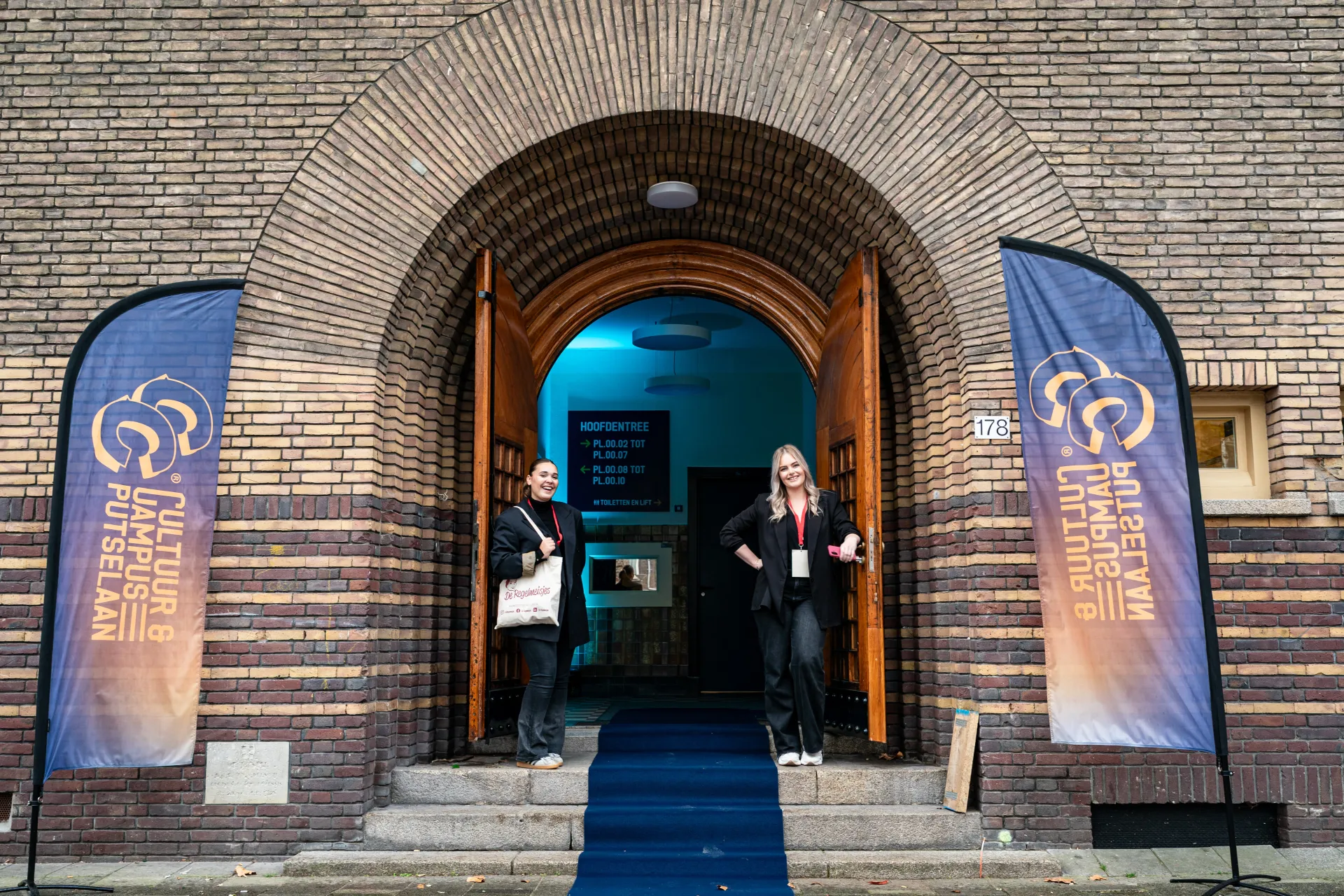
The site on Putselaan also began to be used in 2025. Rotterdam City Council is the owner of this site, and EUR acts as the main tenant. As the main tenant, EUR is responsible for the technical facilities, including network facilities. Rotterdam University of Applied Sciences, the Willem de Kooning Academy and Codarts are also involved in this project as sub-tenants.
Together with Brainpark, Excelsior and Arboretum Trompenburg, EUR has developed a vision for the Erasmus Axis, the extension of the Erasmus Square. This arose out of engagement with the institutions and organisations in the surrounding area. This axis has been named the ‘Magnificent Mile’ and, in addition to the spatial component, also has a programme-related aspect. This initiative will strengthen collaboration between the various parties located along the axis.
All campus caterers have signed the Planetary Health Diet covenant. By 2030, EUR aims to become a campus where 80% of the food on offer is plant-based and only 20% is animal-based. In addition, initial steps have been taken to gain an understanding of emissions resulting from business travel and to monitor progress in this area. Preparatory work for the development of a nature-positive campus also began in 2025.
The physical locations of Erasmus University Rotterdam are:
- The Woudestein campus
- Erasmus University College Rotterdam
- The Institute of Social Studies, The Hague
The digital working environment
Study, research, operational management and collaboration are now impossible without support from digital resources. The Erasmus Digitalisation & Information Services (EDIS) unit, in collaboration with the faculties and other service units, ensures the reliable, secure and always-accessible provision of information. The unit is guided by both strategic decisions – such as the desire to harmonise and rationalise the range of software to help make EUR more agile and efficient – and operational necessity, including the need to run new tendering procedures for software providers as contracts expire. External factors, too, often play a ‘coercive’ role. These include geopolitical developments that have sparked discussions about digital sovereignty, AI-related developments and the need to replace Windows 10.
EUR developed the Erudite Platform in close collaboration with other higher education institutions within SURF (see the Procurement section for information about SURF). This is a safe and responsible solution for generative AI in higher education. Given the pace of developments in this area, initiatives have also been taken with a view to developing a successor to the platform.
Significant progress has been made in harmonising and rationalising the IT landscape. For example, in the education domain, the transition from Zoom to Microsoft Teams has been completed, enabling Zoom to be phased out. This is a step that initially required a great deal of commitment and trust, but which ultimately resulted in significant financial savings and simplified management.
Another example is the transition to a different technology and platform for EUR’s Enterprise Service Bus (ESB), the system that handles all data exchanges between EUR’s applications. This transition was completed in 2025 for all education processes and systems. By adopting a different, more modern approach and organising things differently, the volume of messages and data sent has been reduced by a quarter. This has led not only to a significant acceleration in the handling of messages and data, but also to major gains in terms of sustainability. Several million messages are no longer being sent to and exchanged with a multitude of applications in the cloud. We are taking a similar approach in the operational management and research domains.
The migration of all laptops, desktops and virtual systems from Windows 10 to Windows 11 was successfully completed in 2025.
The project to replace SAP with Oracle was in full swing throughout 2025. However, it was decided to postpone the go-live date from 2026 to 2027.
The project to set up Vidatum as a digital environment to support research projects was successfully completed in 2025.
Finally, as part of the drive towards digital sovereignty and thus the limitation of risks, EUR’s areas of dependency on Big Tech suppliers were scrutinised, and technical trials and pilots were launched. For example, how do mobile phones with a de-Googled operating system or Linux laptops function within EUR’s IT environment? Within SURF, EUR is taking part in a pilot with NextCloud. These trials and pilots are embedded within a broader EUR framework in which EDIS is working in partnership with units such as Integrated Security. Furthermore, as part of the pursuit of data sovereignty, harmonisation and rationalisation of the IT landscape, efforts were made to transfer research data to European and SURF-supported research services, such as Yoda.
Procurement
In 2025, EUR collaborated with other procurement organisations wherever possible to promote efficiency and effectiveness. EUR is a member of SURF, the cooperative association for Dutch education and research institutions. Within SURF, universities, universities of applied sciences, secondary vocational education institutions, university medical centres and research institutes work together on optimal procurement and development of digital services, and on boosting knowledge sharing and innovation. In 2025, EUR once again participated in tendering procedures organised by SURF.
Within the University Procurement Platform (UPI), the emphasis is on the sharing of knowledge and experiences among the participating universities. Four meetings are held each year with the heads of procurement, with a SURF relationship manager present to provide updates on ongoing tendering procedures and to discuss quality, progress and legal compliance. There are various working groups, including on construction, IT, scientific equipment, chemicals, external contractors, sustainability and energy.
EUR is committed to sustainable procurement. Based on the central government’s ‘petal model’ set out in the ‘Socially Responsible Commissioning and Procurement’ (Maatschappelijk Verantwoord Opdrachtgeven en Inkopen, MVOI) manifesto, the ambitions in this area have been distilled into six specific themes: climate, circularity, supply chain responsibility, diversity and inclusion, environment and biodiversity, and social return. Every tendering procedure begins with a sustainability session. During this session, the priority of the MVOI themes for the project are determined.
Sustainability
In 2025, EUR took significant steps to further embed sustainability into its strategy, operations, research, teaching and engagement. A key priority was the development of an integrated approach to sustainability, including the formulation of targets, KPIs and a strengthened governance structure. In addition, EUR has committed to voluntary compliance with the Corporate Sustainability Reporting Directive (CSRD), thereby strengthening its commitment to transparency and accountability.
The ambition to more closely integrate impact and sustainability led to the first combined Impact & Sustainability Report (2024 reporting year). It was drawn up in accordance with the Global Reporting Initiative (GRI) standards. The 2025 report will be published in September 2026 and will comply with the VSME standards under the CSRD.
Progress has been made in several areas. Highlights include enhanced collaboration in research – for example, through a workshop on environmental sustainability – and the launch of a Planetary Health Diet Living Lab. In education, a pilot was carried out for the ‘Climate & Emergency’ introductory module. A framework for sustainability in education has also been developed, along with additional support for lecturers to integrate sustainability into their teaching. In the area of engagement, an assessment framework for collaboration with the fossil fuel sector has been introduced, to ensure that partnerships are better aligned with institutional values.